Sell DDR5 RAM Memory in the UK (2026 Guide): Prices, Value, & Whether It’s Worth Upgrading
DDR5 RAM is in demand across servers, virtualisation, and AI workloads, which means surplus DDR5 memory can be worth real money if you sell it at the right time and in the right format.
This guide covers:
• How much you can sell DDR5 RAM for (used vs scrap)
• Whether DDR5 prices are dropping (and what the forecast looks like)
• Whether DDR5 is worth it now or if you should wait for DDR6
If you’re a business decommissioning servers, upgrading hosts, or clearing spares, Flux IT Hardware can help you turn unused memory into cash with a quick, compliant process. Before diving into pricing and resale value, let’s outline what this guide will cover and who it’s for.

How much can I sell my RAM for?
Can I sell my used RAM?
Yes, and used RAM is generally worth much more than scrap, as long as it’s:
- Genuine branded modules (Samsung / Micron / SK, etc.)
- Clearly labelled (part number + capacity + speed)
- In good physical condition (no corrosion, snapped latches)
- Ideally tested and matched (same model / same spec lots)
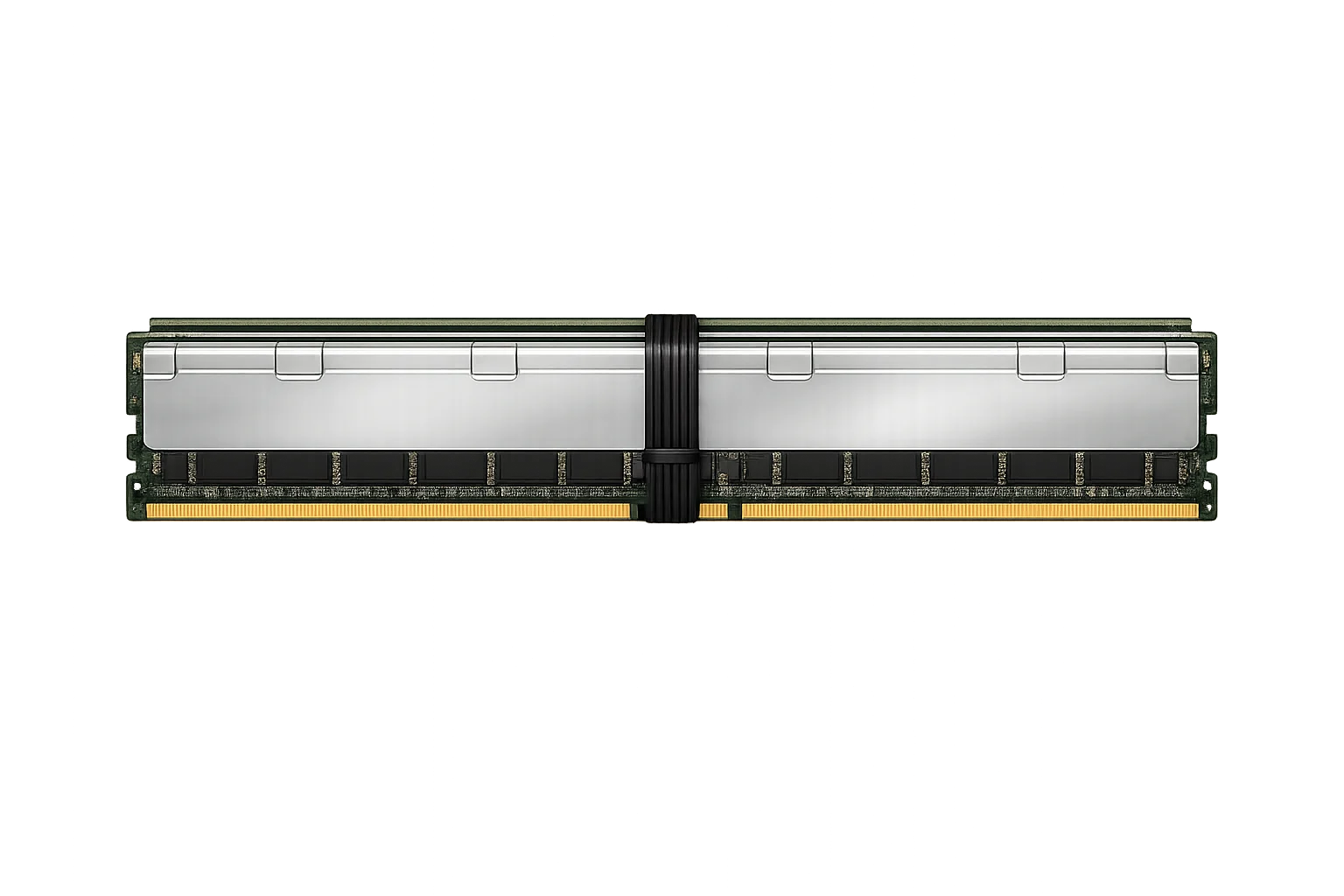
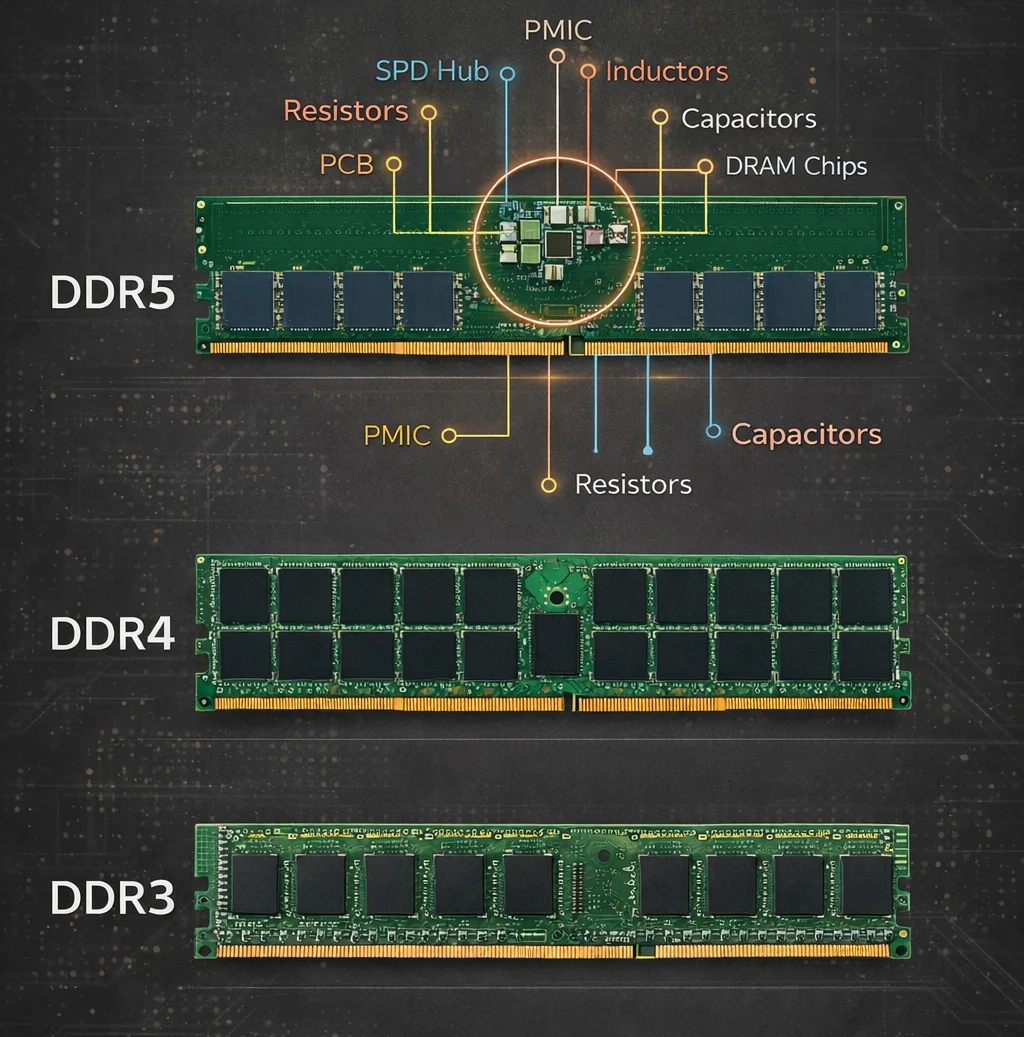
For server DDR5 specifically, buyers care about:
- RDIMM vs UDIMM vs SODIMM
- ECC Registered (common in servers) vs non-ECC (common in desktops)
- Speed grade (e.g., 4800/5200/5600 MT/s)
- Rank and organisation (2Rx4 etc.)
How much should I sell RAM for?
There isn’t a single universal answer because RAM behaves like a commodity: its price fluctuates in response to shifts in supply, demand, and production.
A practical rule:
- If it’s current-gen (DDR5) and in sellable module condition, treat it as resale inventory, not scrap.
- If it’s mixed, damaged, heavily unsorted, or in an unknown condition, it trends toward scrap pricing.
💡Tip: Matched sets (e.g., 8×32GB, 12×64GB) typically sell faster and for better money than odd singles. Read: How IT equipment cashback works.
Does RAM hold its value?
Compared to CPUs and many other IT parts, RAM can hold value well when it’s still in active demand. DDR5 is currently in that window because it’s the mainstream “new” generation for modern platforms, and server demand remains strong. TrendForce has flagged a tight DRAM supply supporting DDR5 contract prices into 2026.
Are DDR5 prices dropping?
Recent industry commentary and reporting points to continued upward pressure into 2026, driven heavily by server/AI demand and constrained supply allocation. TrendForce has explicitly noted DDR5 contract prices expected to keep an upward trajectory through 2026.
Mainstream tech press has also echoed forecasts of DRAM pricing increases into early 2026, tied to AI infrastructure demand.
Why are DDR5 RAM prices going up?
Common drivers include:
- Manufacturers prioritising higher-margin server memory and HBM for AI
- Capacity constraints and production transitions
- Strong data centre demand (AI training/inference uses a lot of DRAM)
That mix can reduce the supply available to typical PC channels and keep pricing firm.
How long will the DDR5 shortage last?
Forecasts vary, but recent coverage suggests tightness could persist as AI-driven demand remains strong and supply expansion is cautious.
Is 32GB DDR5 enough in 2025?
For typical office + browsing + light creative work: yes.
For heavy multitasking, dev workloads, VMs, 4K editing, large datasets, or gaming with lots of background apps: 32GB is often the baseline, and 64GB can be the “feels good” tier.
For servers, the question is different; it depends on:
- Number of VMs
- Memory per core targets
- Database / cache sizing
- AI inference workload footprint
If you’re upgrading servers and ending up with surplus, that’s usually a sign your older modules still have resale demand, especially if they’re clean, matched, and traceable.
Is it worth upgrading to DDR5 now?
If your platform supports DDR5 and you’re bottlenecked by memory bandwidth/capacity, DDR5 can be worth it, particularly for:
- Virtualisation density improvements
- Analytics / memory-heavy workloads
- Certain content creation tasks
- Newer CPU platforms that benefit from DDR5 bandwidth
Is DDR5 a noticeable difference?
Often it’s noticeable in bandwidth-sensitive workloads, and less noticeable if you’re GPU-bound or your workload is mostly CPU latency/IO constrained. It’s not a magic “double the speed” upgrade for every use case, but for the right workloads, it’s meaningful.
Should I buy DDR5 or wait for DDR6?
DDR6 will come eventually, but adoption cycles take time: platform support, pricing maturity, and supply scaling usually mean DDR5 remains the mainstream choice for years, not months.
Should I wait for DDR6? If you need performance or capacity now (or you’re buying for a refresh project), waiting can cost more in lost productivity than you save on future pricing. If you’re not under pressure and your DDR4/DDR5 setup is fine, waiting is reasonable, but most businesses refresh on lifecycle schedules, not “next gen” rumour timing.
💡Tip: Consider upgrading the size and speed of your DDR4/DDR 5 ram with our trade-in Trade-up scheme. Need to buy enterprise IT hardware, tells what you require.
What are the downsides of DDR5?
Common considerations:
- Higher platform cost (motherboards/servers that support DDR5)
- Compatibility constraints (exact module types, ranks, speeds)
- For resale: DDR5 value depends heavily on exact spec and buyer platform needs
The best way to sell DDR5 RAM (and get the best price)
If you want the best return, do these three things:
- Sort it – Group by: capacity, speed, ECC type, and part number.
- Record part numbers – A simple list massively improves quoting speed and accuracy.
- Keep it clean and protected. – Anti-static bags and proper packaging reduce the “downgrade to scrap” risk.
Sell your DDR5 RAM to Flux IT Hardware (Fast UK quote)
If you’ve got DDR5 RAM from:
- server upgrades
- decommissioned racks
- spares from projects
- surplus IT inventory
…we can quote quickly. We buy and handle enterprise hardware every day, and we’ll tell you honestly whether your RAM is best sold as resale or scrap-grade.
Get a quote: Send your RAM list (part numbers + quantities).
Ready to sell DDR5 RAM?
Send us your part numbers and quantities, and we’ll come back with a fast UK valuation. For larger lots, we can also advise on the best way to sort and present stock to maximise value.
Sell your DDR5 RAM to Flux IT Hardware (Fast UK quote)
If you’ve got DDR5 RAM from server upgrades, decommissioned racks, project spares, or surplus inventory, we can provide a quick quote and will tell you honestly whether your RAM is best sold for reuse or treated as scrap-grade.
Get a quote: send part numbers + quantities (or clear photos of labels), and we’ll come back with a valuation.
Note: we would also be interested in DDR4 server RAM.
Sell your RAM: start here | Email: sales@flux-it.co.uk | Tel:
Quick checklist for a faster quote:
1) Part numbers & quantities
2) Photos of labels (if no list)
3) Whether modules are pulled-working / tested / untested
4) Your postcode and collection timeframe
*For more technical updates, browse our latest blog posts.*
DDR6 will take time to become mainstream after it arrives. DDR5 is expected to remain widely used for years due to platform support and pricing maturity.
DDR5 can be worth it when you need more bandwidth or capacity on supported platforms, especially for virtualisation and memory-heavy workloads. Benefits vary by workload.
For typical everyday use, 32GB is usually enough. For heavy multitasking, development, VMs, and content creation, 64GB can be a more comfortable level depending on workload.
The DDR5 outlook depends on manufacturing output and demand from servers and AI infrastructure. If supply tightens and demand grows, DDR5 pricing can remain supported.
DDR5 prices can move quickly. In periods of strong server/AI demand and tight supply, pricing can stay firm or increase rather than drop.
RAM often holds value while it remains in active demand. DDR5 demand can stay strong due to newer platforms and server workloads, but pricing still moves with supply and demand.
Per-kilo pricing varies widely based on how the RAM is graded and sorted. Buyers generally pay more for clean, pre-sorted grades and less for mixed or contaminated lots.
Scrap RAM value depends on grading (gold-edge vs other types), sorting quality, and buyer rules. If your DDR5 is clean and reusable, resale is typically more profitable than scrap.
DDR5 RAM pricing varies by capacity, speed, ECC type, and market demand. Matched sets and clearly identified part numbers usually achieve better resale value than mixed or untested singles.
Yes. Used DDR5 RAM can often be sold for reuse if modules are genuine, clearly labelled, and in good condition. Server part buyers Like Flux IT Hardware typically care about RDIMM/UDIMM type, ECC, speed grade, and matching part numbers.